Baking Soda Volcano
30 minEasyMessy
On the table: 2 tbsp baking soda, 120 ml vinegar, a squirt of dish soap, food colouring, a small bottle, a tray.
Look for: how far the foam travels in 10 seconds.
Guess first, test second, write it down third. These experiments use cupboard ingredients and give a result you can actually see, measure or photograph.
Pick a Weekend Build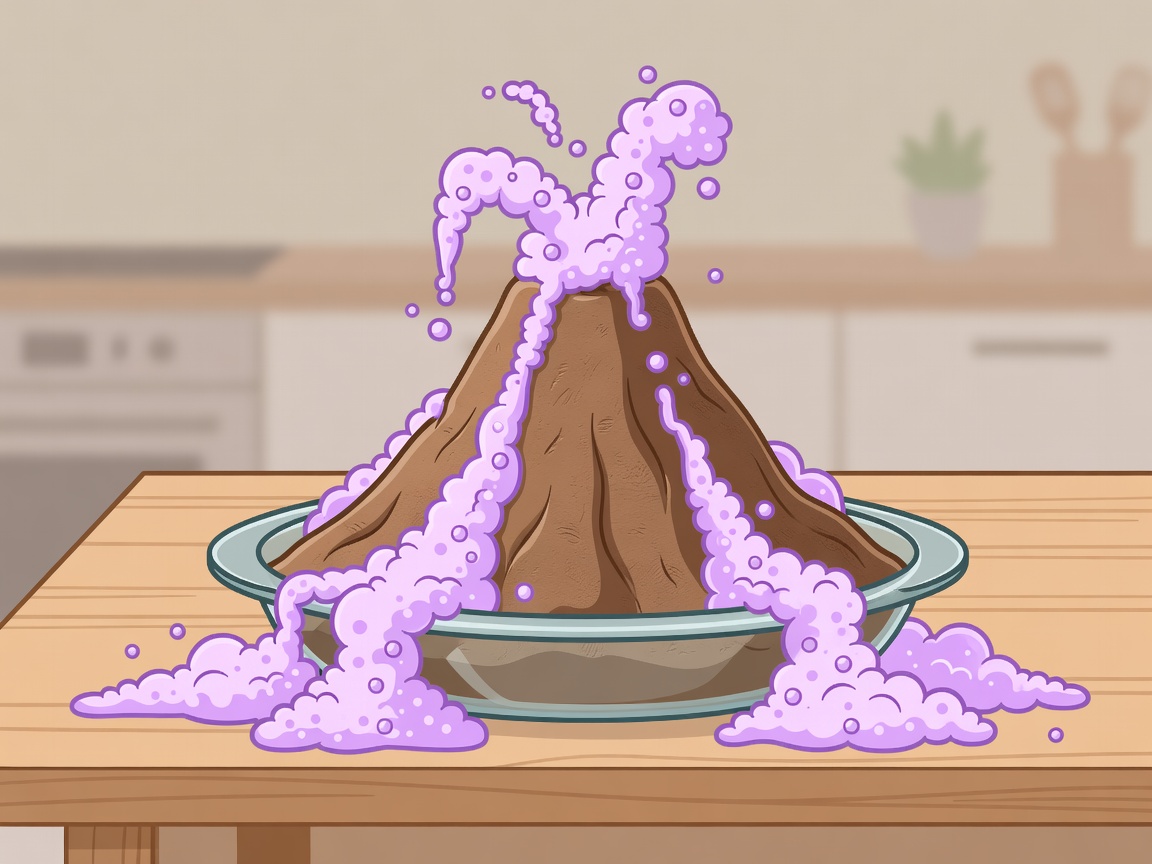
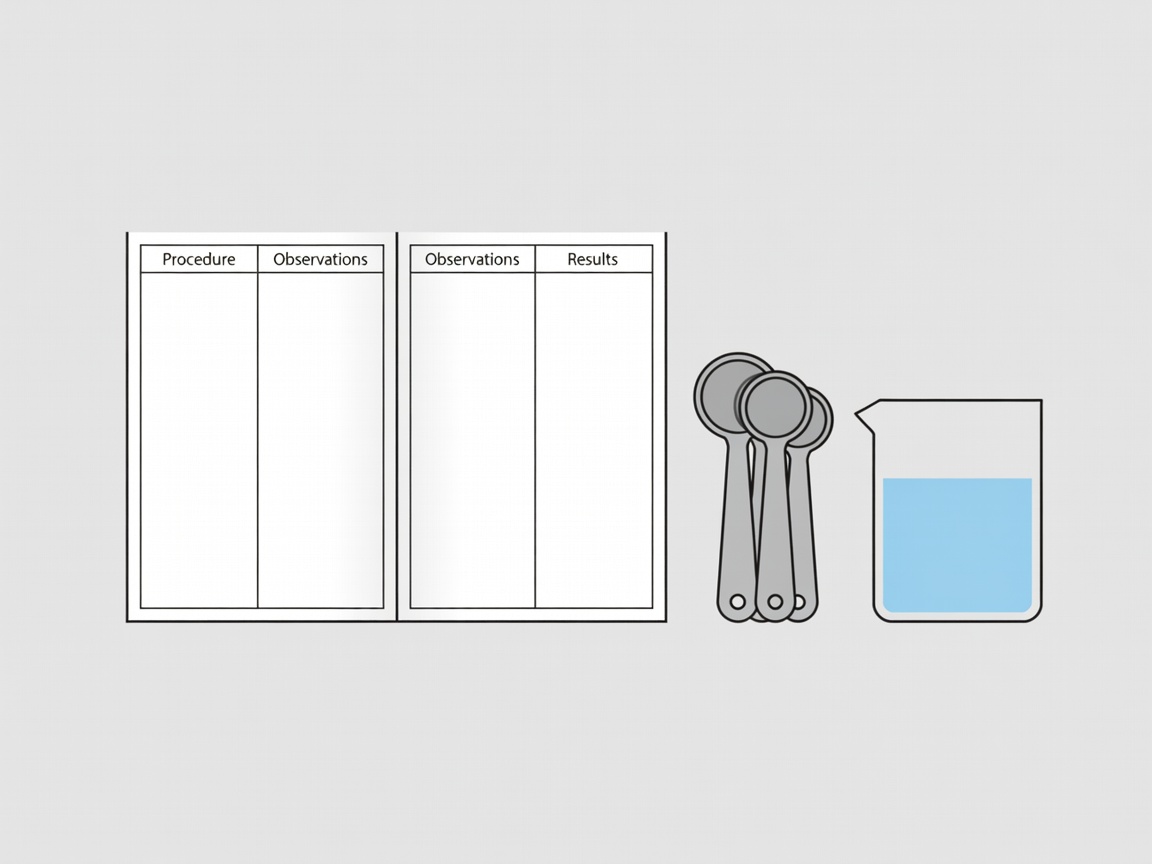
Every experiment on this page uses the same simple record: a column for what I think will happen, a column for what happened, and a column for why it might be different. That's the heart of the scientific method without the jargon. Writing the guess down before you start matters, because memory is sneaky and will happily rewrite your prediction once you see the answer.
Change only one thing per run. If you want to know whether warm vinegar makes a bigger eruption, keep the soda amount, the container and the dish soap identical, and only warm the vinegar. Use measuring spoons rather than pinches; a level teaspoon is a fair test, a heaped one is a guess.
Lay newspaper or a tray down first. Wear safety glasses for anything that fizzes or splashes; inexpensive glasses marked ANSI Z87.1 or EN 166 are fine. And keep one rule above all: nothing from an experiment gets eaten or drunk, even if it started as food.
On the table: 2 tbsp baking soda, 120 ml vinegar, a squirt of dish soap, food colouring, a small bottle, a tray.
Look for: how far the foam travels in 10 seconds.
On the table: a quarter red cabbage, hot water, a sieve, six clear cups, lemon juice, vinegar, baking soda water, soapy water.
Look for: pink for acids, green-yellow for bases.
On the table: paper coffee filters, washable felt-tip pens, a glass of water, pegs.
Look for: hidden colours separating out of black ink.
On the table: 200 g cornflour, about 120 ml water, a bowl, a spoon.
Look for: solid when punched, liquid when stroked.
“A flop is still a result. Write it down and ask why.”
The volcano works because acetic acid in vinegar reacts with sodium bicarbonate, releasing carbon dioxide gas. Dish soap traps that gas in bubbles, which is why the foam climbs. No soap, smaller foam. That's an experiment in itself.
Why did mine fizzle?Red cabbage contains pigments called anthocyanins that shift colour depending on acidity. Lemon juice sits around pH 2 and turns the juice bright pink; baking soda solution sits near pH 8–9 and pushes it toward blue-green; strong household cleaners go yellow. Line your cups up from most acidic to most basic and you've made a working pH scale from a vegetable.
Oobleck takes its name from Dr. Seuss's 1949 book Bartholomew and the Oobleck. Scientists call it a non-Newtonian fluid: its thickness changes with force. Tap it quickly and the cornflour particles jam together; move slowly and they slide past each other. Never pour oobleck down the sink. Let it dry and bin it.
Old baking soda loses its punch, so test a pinch in vinegar before you begin. Chromatography fails with permanent markers because they don't dissolve in water; use washable ones. And cabbage juice goes murky if it boils too long. Steep it in hot water for ten minutes, no more. Want a sturdier setup? See the kit worth buying first.
Your privacy choices We use necessary cookies to run the site and, with your consent, optional ones to measure visits. You can change this at any time.